
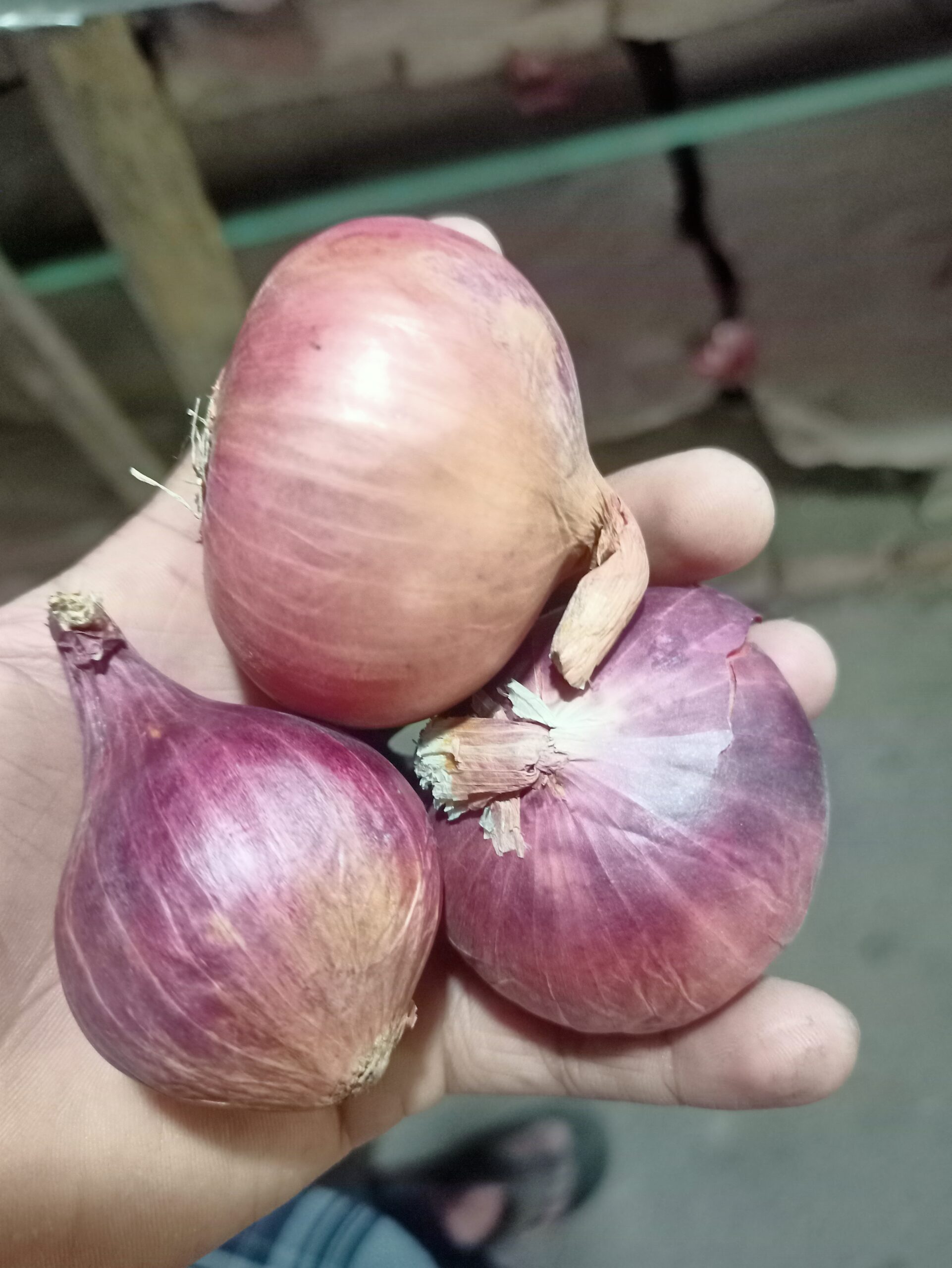
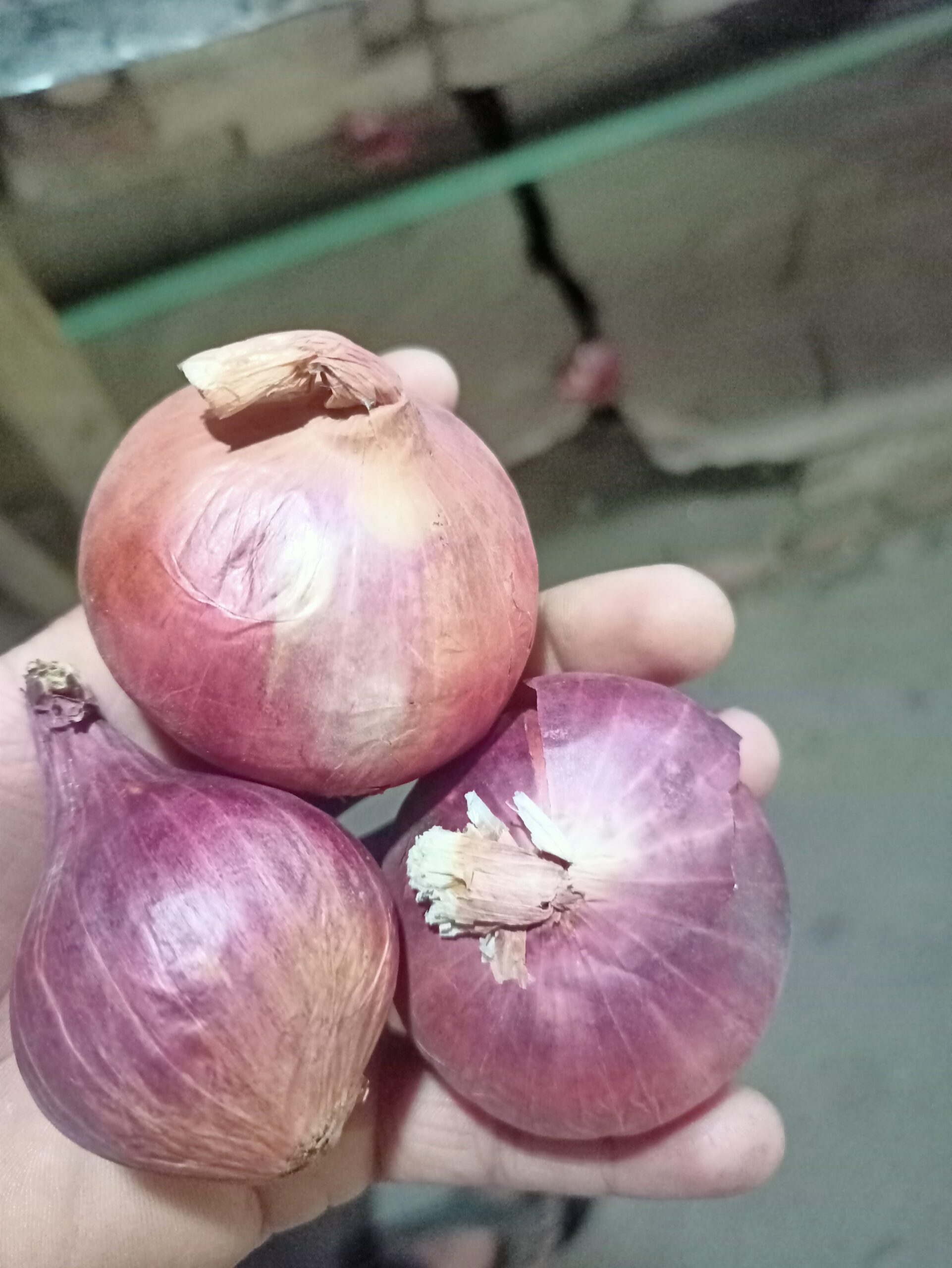
The onion (Allium cepa) is one of the most commonly cultivated and consumed vegetables in the world, belonging to the Amaryllidaceae family. It is a biennial plant grown as an annual crop for its edible bulb, which develops underground. The bulb is made up of concentric layers of fleshy, modified leaves that store nutrients for the plant.
Physical Description:
Onions vary in size, shape, and color, ranging from small to large and round to oval. The outer skin is thin, papery, and dry, typically colored brown, yellow, red, or white, depending on the variety. Inside, the bulb’s flesh is crisp, juicy, and white to pale yellow, with a characteristic pungent aroma and flavor that intensifies when cut due to the release of sulfur-containing compounds.
Growth and Cultivation:
Onions grow best in well-drained, fertile soil under full sunlight. They are usually propagated from seeds, sets (small bulbs), or transplants. The plant produces long, hollow, green leaves that rise above the ground, and in its second year, it forms a tall flowering stalk with a globe-shaped cluster of small white or pinkish flowers.
Culinary Uses:
Onions are a fundamental ingredient in cuisines around the world. They can be eaten raw, cooked, grilled, roasted, sautéed, caramelized, or pickled. Raw onions add sharpness to salads and sandwiches, while cooking brings out their sweetness and softens their texture. They form the base for countless savory dishes, soups, sauces, and stews.
Nutritional and Health Benefits:
Onions are low in calories but high in nutrients. They are an excellent source of:
- Vitamin C, which boosts immunity and promotes skin health.
- Vitamin B6 and folate, important for metabolism and nerve function.
- Antioxidants such as quercetin and sulfur compounds, which help reduce inflammation and may lower the risk of heart disease and certain cancers.
Other Uses:
Beyond cooking, onions have traditional medicinal uses. They have been used for centuries to treat colds, coughs, and infections due to their antibacterial and anti-inflammatory properties. Onion extracts are also studied for potential benefits in blood sugar regulation and heart health.
In summary, the onion is a versatile, flavorful, and nutritious vegetable that forms the foundation of countless dishes worldwide. Its unique taste and health-promoting properties make it an essential part of both traditional and modern diets.


Reviews
There are no reviews yet.