
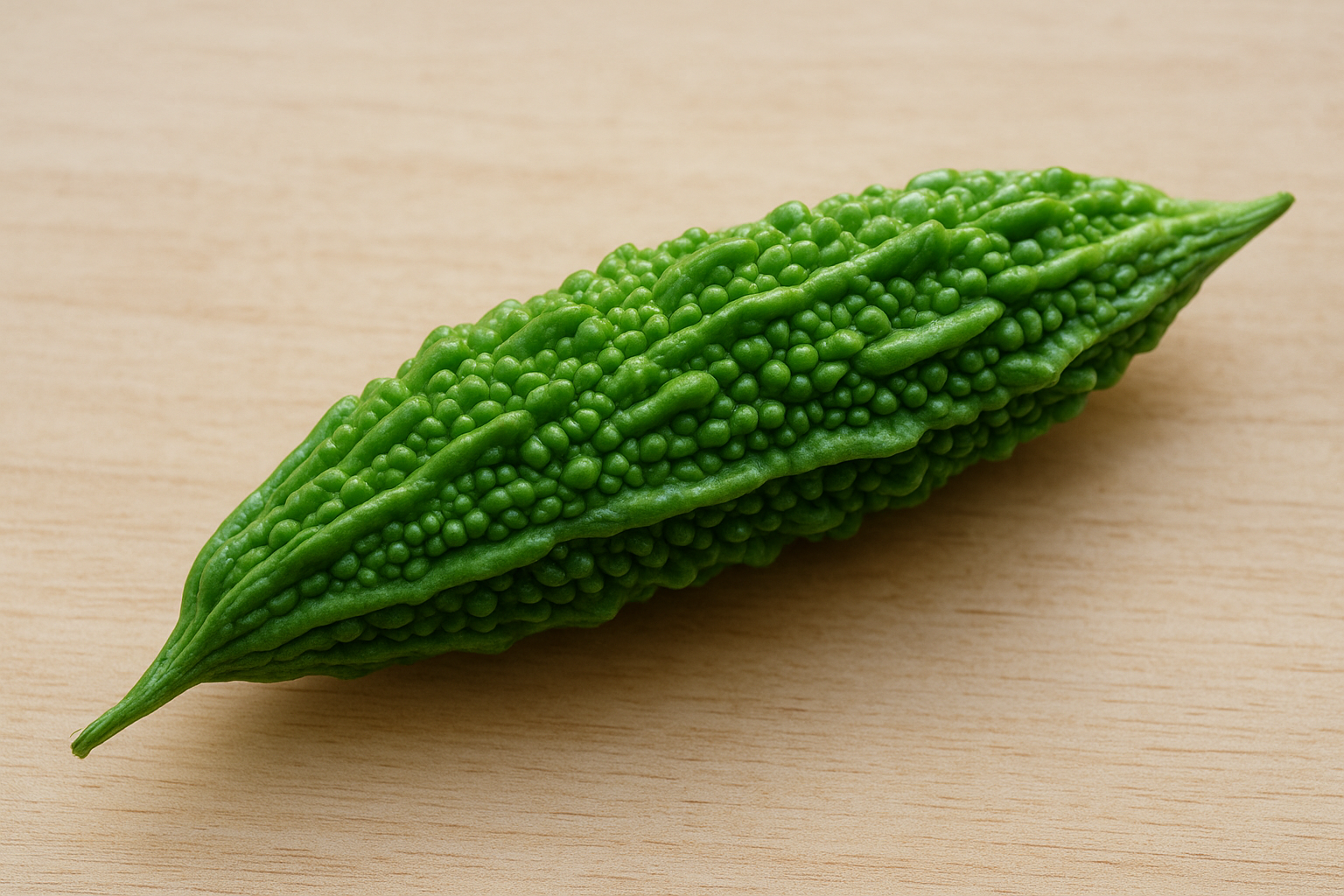
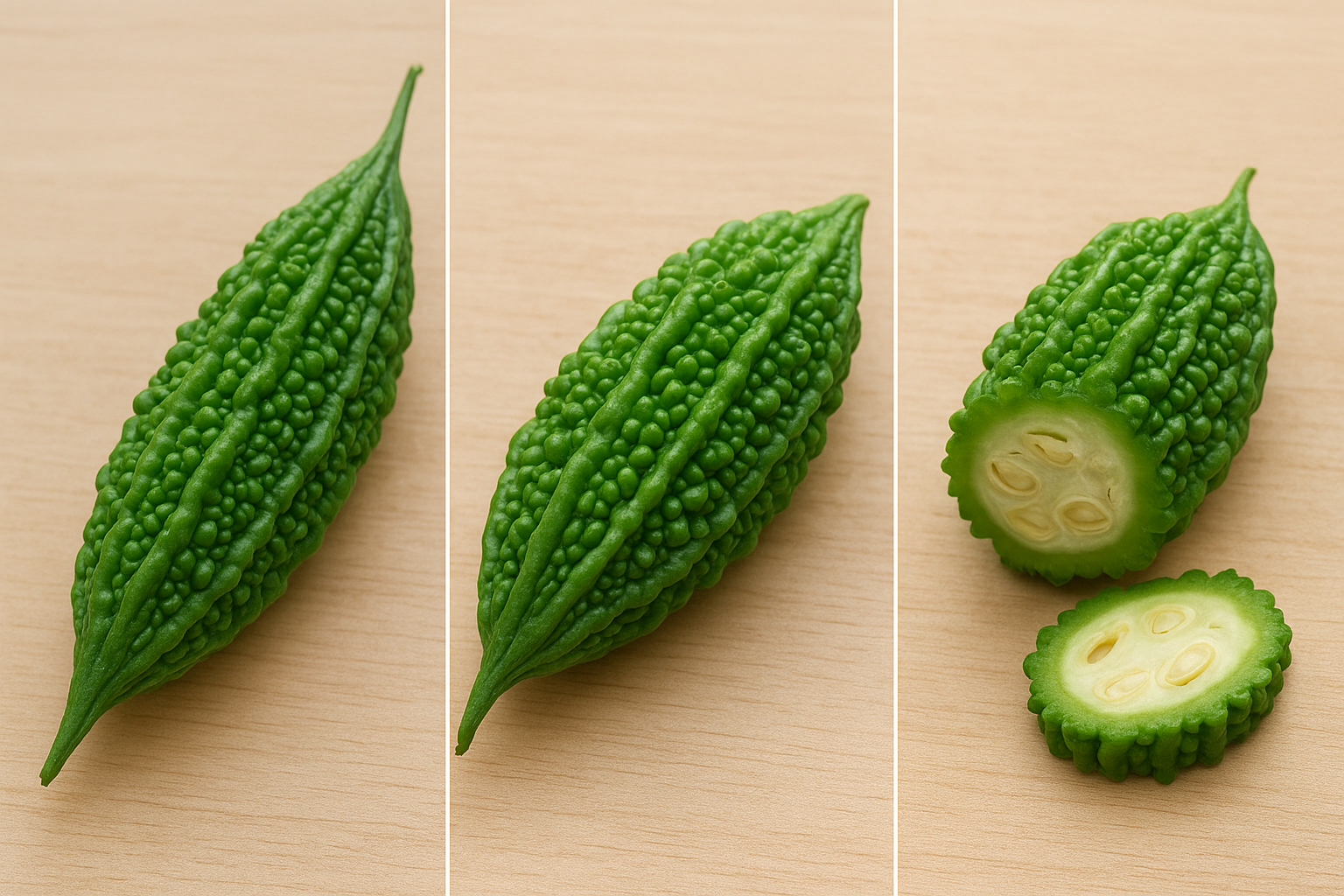
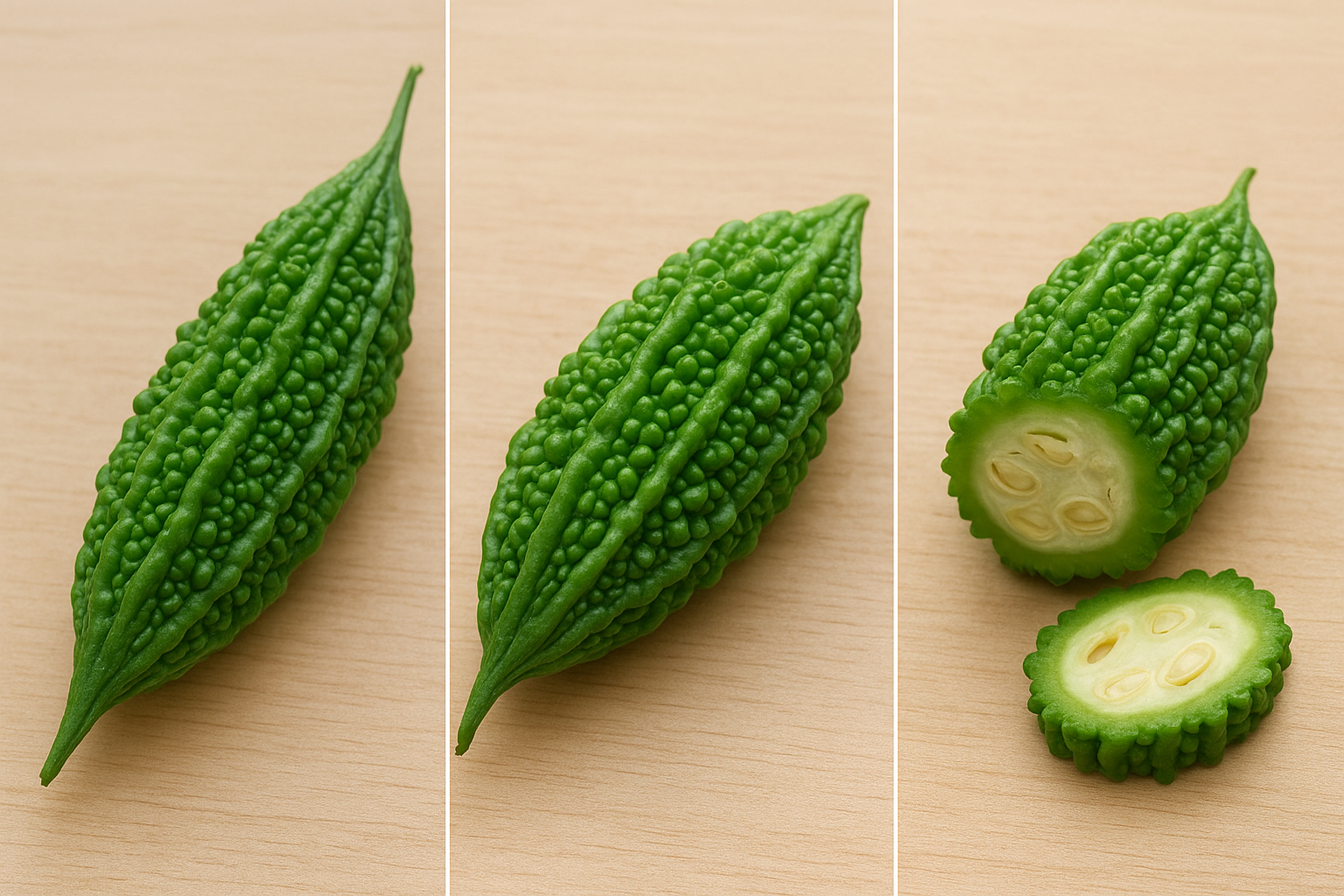
🌿 Karela (Bitter Gourd) Description
Botanical Name: Momordica charantia
Common Names: Karela (Hindi), Bitter Gourd, Bitter Melon, Pavakka (Malayalam), Pavakkai (Tamil), Kakara (Telugu)
Family: Cucurbitaceae (Cucumber family)
🥒 Physical Description
Karela is a green, elongated, warty vegetable with a distinct bitter taste.
-
Shape: Oblong and ridged with a rough surface.
-
Size: Usually 10–20 cm long, depending on the variety.
-
Color: Ranges from light green to dark green; some varieties turn yellow-orange when ripe.
-
Seeds: White when unripe, turning red as the fruit matures.
🌱 Plant Description
Karela grows on a climbing vine with thin stems and tendrils that help it attach to supports.
-
Leaves: Deeply lobed and bright green.
-
Flowers: Small, yellow, and unisexual (male and female flowers grow separately).
-
Fruit: Develops from the female flower after pollination.
💪 Nutritional & Medicinal Value
Karela is highly valued in traditional medicine and nutrition.
-
Rich in: Vitamin C, Vitamin A, Iron, Magnesium, and Dietary Fiber.
-
Medicinal Uses:
-
Helps regulate blood sugar levels (useful for diabetics)
-
Supports liver health and digestion
-
Has antioxidant and anti-inflammatory properties
-
Aids in weight management
-
🍛 Culinary Uses
-
Commonly cooked as stuffed karela, fried chips, karela curry, or juice.
-
Despite its bitterness, it’s enjoyed for its unique flavor and health benefits
Reviews
There are no reviews yet.